 |
|


|
|
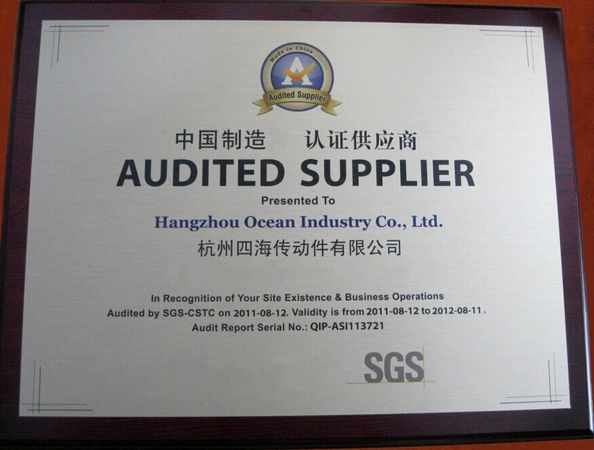
Certificaat

- Ik ben online Chatten Nu
Bedrijf Nieuws
Many Gear Failures Actually Stem From the Manufacturing Stage
In the field of mechanical transmission, many engineers assume that once gear design is finalized and strength calculations pass, the project is mostly on track. In reality, a large share of gear failures do not originate in the design phase, but during manufacturing.
Even a well-performing gear design will fail to become a viable product if it is too difficult to machine, carries excessive production costs, or cannot be mass-produced consistently.
So what is the core focus of modern gear development? A sound design must deliver reliable performance and be manufacturable. The destination of gear design is manufacturing itself.
Design engineers typically prioritize these indicators:
- Load capacity
- Fatigue life
- Transmission efficiency
- Vibration and noise (NVH)
- Weight and dimensional footprint
By contrast, manufacturing engineers focus on practical execution:
- Can this feature be machined?
- Is stable mass production achievable?
- Can we maintain a consistent yield rate?
- Is the processing cost commercially viable?
If manufacturability is overlooked at the design stage, downstream problems frequently emerge:
- Structural rework
- Frequent process adjustments
- Extended development lead time
- Escalated production costs
This is why more manufacturers adopt DFM, Design for Manufacturing, to align design and manufacturing workflows from the start.
Why Can Some Gears Be Designed on Drawings But Not Produced?
Gear machining relies on specialized cutting tools and dedicated equipment. A theoretically feasible geometry may not suit real-world machining operations.
Typical constraints include:
- Insufficient clearance between adjacent gears
- No access for cutting tools
- Inability to finish-grind gear profiles
- Difficult clamping and positioning during setup
These issues are rarely visible on 2D drawings and usually surface only during prototype trials. Modern design software now goes beyond strength simulation to evaluate:
- Tool interference
- Machining toolpaths
- Process feasibility
- Production cost forecasts
The goal is to resolve risks before production begins.
Higher Tool Purchase Price, Lower Overall Cost?
Many purchasing teams follow a simple rule: select the cheapest available cutting tools. However, manufacturing evaluates total cost of ownership instead of upfront price.
Take gear hobs as an example. Larger, premium hobs often come with a higher initial price, yet they offer these advantages: ✅ Longer service life ✅ More regrinding cycles ✅ Higher machining throughput ✅ More consistent part quality
When one tool can produce far more workpieces, the per-unit machining cost drops significantly. This is a core principle of modern manufacturing management: Never judge a cutting tool by its sticker price alone; assess its full lifecycle cost.
Machining Allowance Matters Far More Than Most Expect
A common misconception: rough machine the gear first, then finish grind to tolerance. In fact, machining allowance directly governs final gear quality.
- Insufficient allowance leaves little material for finishing, making it impossible to achieve the required tooth profile.
- Excessive allowance increases cycle time, accelerates tool wear and raises total costs.
Moreover, allowance variation impacts:
- Tooth profile modification (tip relief)
- Contact pattern distribution
- Noise performance
- Service lifespan
These tiny deviations are greatly amplified in high-speed, low-noise new energy vehicle reducers.
Where Is the Weakest Point of a Gear?
The tooth root. Nearly all fatigue fractures on gears initiate at the tooth root, where bending stress reaches its maximum. Poor tooth root geometry easily triggers:
- Stress concentration
- Microcrack initiation
- Progressive fatigue damage
- Premature gear breakage
Modern gear engineering therefore prioritizes optimization of:
- Tooth root fillet radius
- Involute transition curve
- Undercut prevention
- Grinding parameters
Even adjustments of a fraction of a millimeter can bring a meaningful improvement in fatigue life.
Does Higher Precision Always Equal Better Performance?
It is widely believed that gears should be made to the highest possible precision class. This is not always true. Tighter precision requirements mean:
- Stricter dimensional tolerances
- More complex machining sequences
- Higher production expenditure
For many industrial equipment applications, chasing ultra-high precision delivers negligible performance gains. Optimal engineering strikes a balance: select the minimum acceptable precision grade that meets functional requirements.
Digital Manufacturing Is Reshaping the Gear Industry
Traditionally, design, process planning and production operated as separate siloed stages. The current industry trend is unified collaborative development.
While building 3D models, designers can preview:
- Strength compliance
- Potential tool interference
- Cutting tool compatibility
- Cost fluctuations
- High-risk quality zones
This digital workflow cuts down:
- Prototype trial rounds
- Hardware iterations
- Manufacturing uncertainties
As a result, time-to-market is shortened drastically.
A Shift in Mindset From Design to Production
The old development logic follows a linear sequence: design first, manufacture later. Contemporary engineering embeds manufacturability assessment right inside the design phase.
For manufacturing companies:
- Production cost defines product competitiveness
- Process capability determines mass production feasibility
- Consistent quality builds market reputation
Manufacturability has become one of the core metrics to judge whether a design is good or not.
Closing Thoughts
Gear engineering today is no longer just mathematical parameter calculation. A qualified gear product must balance multiple dimensions: Mechanical strength, noise performance, cost, process feasibility and scalable mass production.
For manufacturers, a brilliant design is not defined by a polished drawing. Its true value lies in stable, efficient and low-cost serial production. Only with the engineering mindset of design for manufacturability can gear products move smoothly from digital drawings to the global market.
Bartijd : 2026-10-29 11:24:48
>> Nieuwslijst
Contactgegevens
Hangzhou Ocean Industry Co.,Ltd
Contactpersoon: Mrs. Lily Mao
Tel.: 008613588811830
Fax: 86-571-88844378